
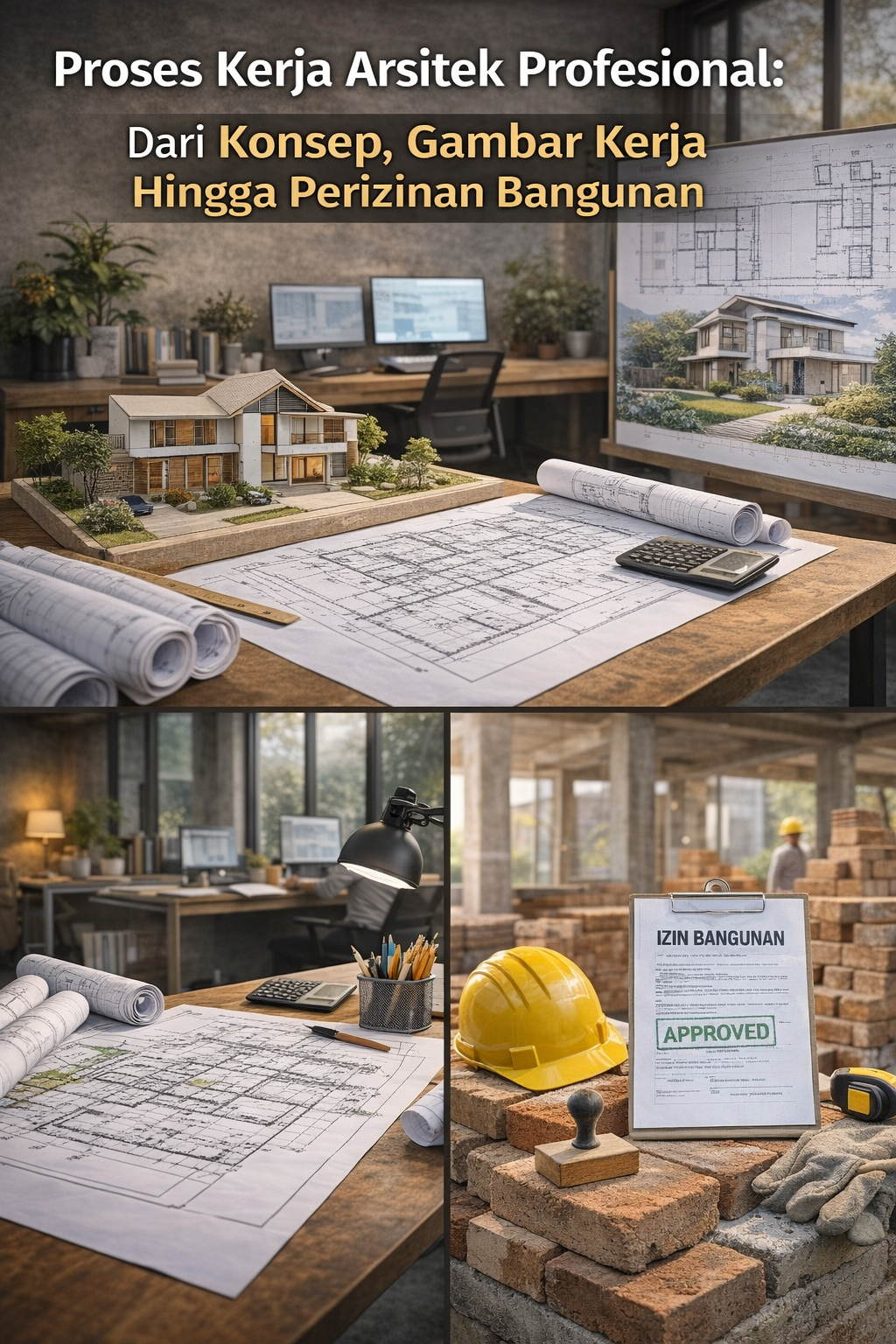
The Work Process of a Professional Architect In every construction project, the role of a professional architect is very important to ensure that the building is not only visually appealing, but also functional, safe, and compliant with regulations. The architect's work process is carried out in stages and systematically, starting from the design concept to the processing of building permits.
This article will discuss the complete stages of a professional architect's work so that you understand how a project is planned properly from the start.
Initial Stage: Consultation and Needs Analysis
The architect's work process always begins with a deep understanding of the client's needs.
Consultation with Clients
At this stage, the architect will:
- Listening to clients' needs and desires
- Understanding the function of buildings
- Determining the desired architectural style
- Adjusting to the budget and time targets
Good consultation is the cornerstone of successful design.
Location and Regulatory Analysis
Architects also analyze:
- Land conditions and surrounding environment
- Sun direction and air circulation
- Access and utilities
- Zoning regulations and local ordinances
This analysis is important so that the design can be implemented optimally and legally.
Architectural Design Concept Stage
The Work Process of a Professional Architect
After the initial data was collected, the architects began to develop the design concept.
Concept and Design Idea Development
At this stage, the architect will:
- Developing the concept of space
- Determining the mass and shape of a building
- Regulating spatial zoning
- Adapting the concept to the character of the location
The design concept provides an initial overview of the direction of the building design.
Concept Presentation to Clients
Concepts are usually presented in the form of:
- Design sketch
- Preliminary floor plan
- Simple 3D visualization
- Explanation of design concepts
Client input will be used to refine the design.
Design Development Stage
Once the concept is approved, the architect moves on to the more detailed design development stage.
Floor Plan and Spatial Development
The architect will:
- Refining the floor plan
- Determining the size and proportions of the space
- Regulating circulation and connections between spaces
This stage ensures that the design meets user requirements.
Coordination with Other Consultants
On professional projects, architects will coordinate with:
- Structural consultant
- MEP (mechanical, electrical, plumbing) consultant
- Landscape consultant
- Interior consultant (if needed)
This coordination aims to ensure that the designs are integrated with each other.
Technical Drawing Stage
Working drawings are important documents that serve as a reference for construction implementation.
What Are Architectural Working Drawings?
Working drawings include:
- Floor plan, elevation, and section of a building
- Construction details
- Material specifications
- Supplementary technical drawings
Working drawings must be clear, complete, and accurate.
Working Drawing Function
Working drawings are used for:
- Field contractor guidelines
- Calculation of construction costs
- Avoiding construction errors
- Supporting documents for licensing
Building Permit Application Stage
Licensing is an important part of the professional architect's work process in Indonesia.
Types of Building Permits
Architects usually assist in managing:
- PBG (Building Permit)
- SLF (Certificate of Functionality)
- Other supporting technical documents
Permits ensure that buildings are legal and safe to use.
The Role of Architects in the Licensing Process
Architects are responsible for:
- Preparing images and technical documents
- Adapting designs to regulations
- Assisting with the licensing application process
With the help of an architect, the permitting process becomes smoother.
Construction Assistance Phase (Optional)
On some projects, architects also provide assistance during the construction process.
Field Supervision and Evaluation
Construction assistance includes:
- Inspection of construction conformity with working drawings
- Work quality assessment
- Coordination with contractors
This stage helps maintain the quality of the final building.
See also:
Benefits of Using a Professional Architect
Using the services of a professional architect offers various advantages, including:
- Well-planned and functional design
- Cost and time efficiency
- Buildings that comply with standards and regulations
- Reducing the risk of construction errors
Professional architects ensure that projects run systematically and purposefully.
Conclusion
The work process of a professional architect is carried out in stages, starting from consultation, design concept, development, working drawings, to building permit processing. Each stage plays an important role in creating a building that is of high quality, safe, and meets the needs.
By understanding this process, you can be more confident in choosing professional architectural services for your construction project.
See Also Dev Partner: https://tipwebhost.com/
 Indonesian
  English